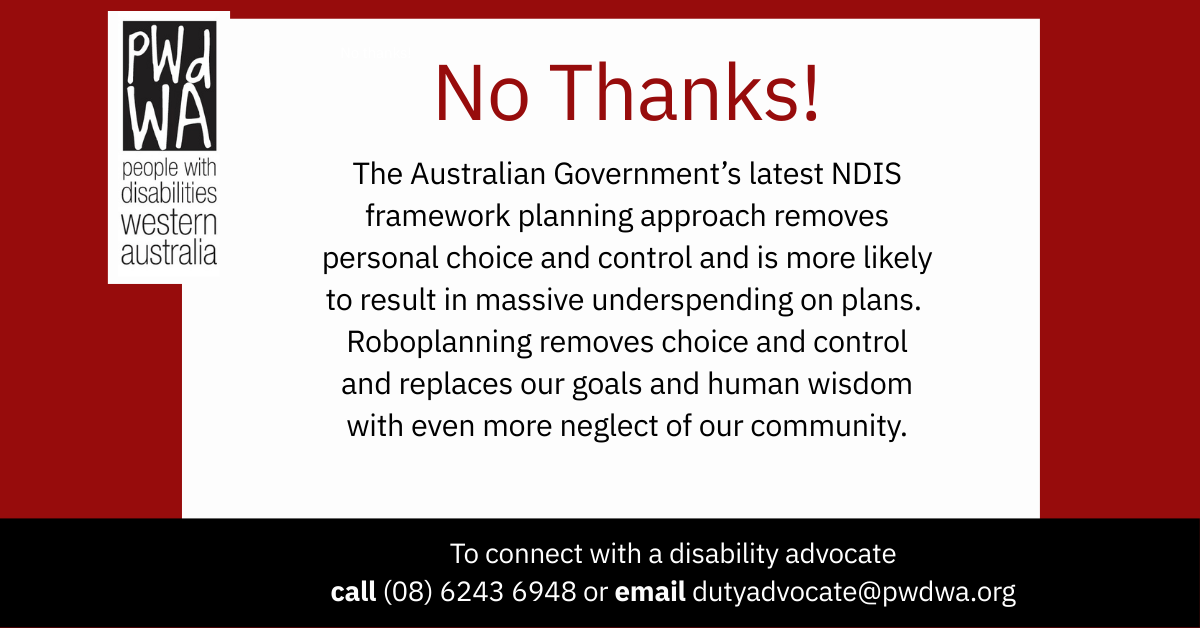
NDIS Distress: As we reflect on our 2026 agenda it seems clear the NDIS changes the Australian Government released in the final weeks of 2025 aim to reduce choice and control and make it very hard for people to spend money from their NDIS plans.
The cornerstone legislation for some of these changes is currently going through the Australian Parliament. Known as the National Disability Insurance Scheme Amendment (Integrity and Safeguarding) Bill 2025, the bill is currently with the Australian Senate’s Community Affairs Legislation Committee who are now seeking feedback by 6 February 2026.
In the Bill first introduced to the Senate on 26 November 2025 legislative changes are presented as necessary to introduce safeguarding protection to National Disability Insurance Scheme recipients. However our advocates believe the so-called reforms are designed to strip out choice and control over things such as service providers in the name of keeping people safe.
When there is less choice and control over key things we lose quality of life as things no longer meet our needs or goals for ourselves. For example, when there are few choices of Supported Independent Living and Supported Disability Accommodation providers, the result will mean that fewer of us will find places to live that suit us when we need them. More of us will end up homeless and in despair, and even more SIL and SDA funds in our NDIS plans will go unspent, with the National Disability Insurance Agency and the government pocketing the difference. Unspent NDIS plans aren’t like prepaid mobile phone bills – the funds don’t roll over. NDIS plans are use-it-or-lose-it, with the money going into the government’s back pocket while we suffer the consequence.
The Australia Government’s decision to take the Roboplanning route with the latest iteration of “independent assessments” – framework planning – carries similar risks for people. When the plans people have drafted using their choice-and-control and goals for their own lives are replaced by AI or computer-prepared plans then these cookie-cutter plans won’t suit people. Our advocates have told the federal government its new planning approach is more likely to result in underspending on plans, either from the funded services not suiting people or from massive underspending as the services are not available in local communities (hello, slim markets). However despite our advocates highlighting even more massive gaps will emerge, the federal government is unconcerned its Roboplans will result in underspending and massive under-servicing of our community needs. It’s not what we wanted from our NDIS as individuals or a collective.
The NDIS has been a model scheme at times in its life, especially at the start of the pandemic when people were in deep need and supported well by deeply committed local area coordinators. Now their plans are computer prepared and always at threat of a hostile desktop review from an aggressive telephone planner who could call at any time from an unlisted number. It’s no wonder those of us with trauma live in fear of being cut off forever.
It seems these new plans will be uncontestable and impractical, with the future for Administrative Appeals Tribunal re-writing and negotiated outcomes looking pretty poor, especially in the second half of the year. We need practical, accessible ways to get our plans to suit us. Avenues more practical than tagging the NDIA in public posts and hoping for the best.
With foundational supports for neurodivergent people with so-called mild autism disappearing in an ableist spin of Thriving-talk, our community is scared and wondering how much of the NDIS will disappear or be handed off to the states.
Do we throw our hats in with states and back the reintroduction of block funding? It’s certainly looking more like a grass-is-greener approach right now. Only time will tell what system we end up with in WA and other state and territories going forward.
In the meantime, our community will certainly enjoy much reduced choice and control and continue to fear the ringing phone. It’s hardly an “I heart NDIS” moment. Our community is distressed and has every reason to be.
As we start the year and aim to meet our new year’s and 2026 resolutions, let’s hope we can turn around the agenda this year and end up with reforms that really suit us.
Nothing About Us Without Us.
People with Disabilities WA