DIAGNOSE EARLY: PWdWA member Ricky McKnight has launched his own advocacy program urging governments to diagnose kids earlier and include adults with lived experience in policy-making, to provide better futures for kids and adults alike, in a moving opinion piece. Arguing “We are paying for late support and calling it unavoidable,” Ricky says it’s time to set a new direction for the diagnosis of autism and ADHD in Australia, to benefit our community and society.
OPINION: “I was diagnosed autistic as an adult. By the time I understood why school, work, healthcare, and housing had always felt impossible to navigate, the damage from years of missed support was already done. I am not an exception. I am the predictable outcome of systems that intervene too late and at far greater cost.
“We often talk about disability support as expensive. What we do not talk about enough is how expensive exclusion is. When children are pushed out of education because classrooms are overwhelming, we pay later through school refusal, mental health services, and early workforce exit. When disabled adults cannot access work, we pay through income support instead of collecting tax. When people are priced out of stable housing, we pay through homelessness services, hospital bed block, and crisis care.
“The frustrating part is that many of the solutions are not complex or costly. They are practical design choices that reduce pressure rather than respond after harm has already occurred.
“In schools, many autistic students would remain engaged if flexible, low-demand learning options were available within mainstream settings. This can be as simple as quiet, dimly lit computer rooms with minimal noise, reduced visual clutter, and lower teacher and peer demands. In these spaces, learning can be self-paced, supported by gentle supervision focused on access and safety rather than constant instruction or correction. These environments cost far less than repeated suspensions, alternative education placements, or later mental health intervention, and they keep students connected to learning rather than excluded from it.
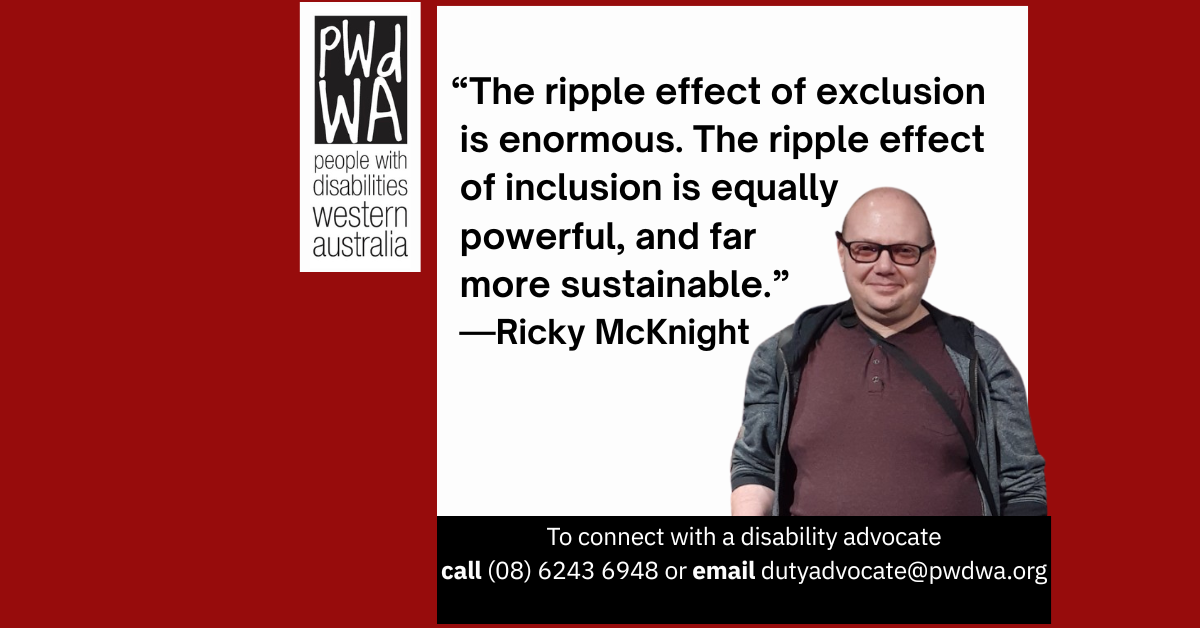
“The ripple effect of exclusion is enormous. The ripple effect of inclusion is equally powerful, and far more sustainable.
“Employment is another area where exclusion is costly. Many disabled people want to work and are capable of working when jobs are designed to be sustainable. Yet recruitment systems are built around neurotypical communication styles and high sensory tolerance, excluding capable candidates before they can demonstrate competence. Disability-led inclusive employment services, designed with both professional and lived experience, would better match people to roles with clear expectations, predictable routines, flexible hours, and reduced sensory load.
“Government rebates for businesses that actively employ disabled people and demonstrate safe, sustainable workplace practices would create a strong incentive for employers to rethink job design. Rebates tied to retention, workplace adjustments, and employee wellbeing would reduce turnover and burnout. While these incentives require upfront investment, they save money over time by reducing reliance on income support and increasing tax contribution.
“Housing policy is also driving preventable crisis. As affordable housing programs such as NRAS end, disabled tenants are being priced out of stable homes. Many disabled people do not need large houses. They need affordable, predictable housing. Expanding unit and apartment-style developments that include a mix of private buyers and affordable housing would better match actual needs. Smaller dwellings are cheaper to build and maintain, allow more people to be housed within the same footprint, and reduce homelessness, emergency accommodation use, and hospital bed block.
“Across education, employment, and housing, one factor consistently worsens outcomes: late identification.
“Earlier identification of neurotype allows supports to be aligned before disengagement, burnout, or crisis take hold. This could include annual school-based assessment visits for key age groups by psychologists and allied health professionals who specialise in neurodevelopmental assessment, including neurodivergent clinicians whose lived understanding can improve accuracy and reduce misidentification.
“Early identification means students can access learning adaptations sooner, be linked into employment pathway supports before leaving school, and receive clear information about accessible work and affordable living options as part of transition planning.
“These are not radical ideas. They are sensible, preventative measures.
“The disability support system was meant to stop people from reaching crisis. Instead, too many of us are navigating education, work, housing, and healthcare in ways that actively increase risk. Sensory supports remain underfunded. Providers are closing. Continuity of care is breaking down. None of this happens because needs have disappeared. It happens because systems are not designed for stability.
“When disabled people and professionals with lived experience are included in system design from the beginning, costly mistakes are avoided early. Short-term adjustments prevent mid-term disengagement and long-term crisis. This saves money across health, housing, welfare, and justice systems. It also prevents trauma, which carries its own extended costs.
“Exclusion is expensive.
“Prevention works.
“And the cost of doing nothing is far higher than we are currently willing to admit.”
—Ricky McKnight